 English
 Türkçe
  العربية
  Русский
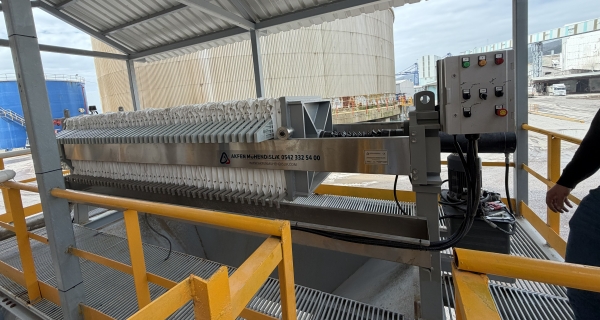
In a wastewater treatment plant, a filter press is primarily used to dewater the sludge generated by the treatment process. Rather than treating the full raw wastewater flow, the press typically receives a solids-rich sludge stream and separates part of its water as filtrate. The retained solids form a filter cake that is easier to handle than the original liquid sludge.
What role does a filter press play in wastewater treatment?
Physical, chemical and biological treatment processes transfer a portion of the contaminants in wastewater into a sludge phase. That sludge can contain a large amount of water, which increases the volume that must be stored, transported or processed further. A filter press reduces this volume by applying pressure filtration to the sludge.
The dewatering step creates two streams: filtrate, which passes through the filter cloth, and filter cake, which remains in the chambers between the plates. The practical value of the press is therefore linked to sludge handling and solids management within the treatment plant.
Where is the filter press positioned in the treatment process?
A filter press is generally installed on the sludge treatment side of the plant, after solids have already been separated or generated by upstream treatment. The sludge produced during treatment can then be collected and prepared for dewatering. Depending on the plant layout, it may first be collected or thickened before being fed to the press.
This distinction is important: a filter press is normally not a substitute for the upstream wastewater treatment stages. Its function is to process the concentrated residual solids produced by those stages and remove additional water from them.
What happens during sludge dewatering in a filter press?
Sludge is pumped into sealed chambers formed by the closed filter plates. The liquid phase moves through the filter cloth and into filtrate channels, while suspended solids are retained on the cloth. As feeding continues, the retained solids build a cake and resistance to flow increases.
When the filtration cycle is complete, feeding stops, the plate pack is opened and the cake is discharged. Because this is a batch operation, the number and duration of cycles must match the amount of sludge produced by the wastewater treatment plant.
How are filtrate and filter cake handled?
The destination of the filtrate depends on its quality and on the plant process design. In many treatment schemes, filtrate can be returned to an appropriate upstream treatment point for further processing. In other cases, it may be routed to another treatment step. The correct route should be based on the actual suspended and dissolved constituents present in the filtrate.
The filter cake is the dewatered sludge fraction. Its subsequent handling, reuse or disposal depends on the origin and composition of the sludge, applicable regulations and the facility's solids-management plan. The filter press itself does not determine the final destination of the cake; its role is to reduce water content and create a more manageable solids stream.
Which wastewater characteristics affect filter press performance?
Dewatering results can vary substantially between wastewater treatment plants because sludge properties are not uniform. Important process factors include:
- Sludge type and solids concentration: Biological, chemically precipitated and mineral-rich sludges can respond very differently to pressure filtration.
- Sludge structure: The nature of the solids in the sludge can affect filtration results.
- Support chemicals: Where necessary, suitable chemicals can be used to make the sludge easier to filter.
- Filter cloth characteristics: Permeability and solids-retention behaviour influence filtrate clarity, filtration time and cake release.
- Feed consistency: Large variations in sludge concentration can change cycle time and cake characteristics from batch to batch.
For this reason, two plants with similar wastewater flow rates may not obtain the same dewatering result with identical operating conditions. The sludge itself must be evaluated as part of the application.
Why is filter pressing used for wastewater sludge?
Dewatering reduces the amount of water carried with the sludge, so the plant has less sludge volume to store, move and manage after treatment. A filter press helps reduce the water in sludge and produces a cake that is easier to handle and transport.
At the same time, a filter press requires a planned operating cycle, cake discharge and routine attention to the filtration surfaces. Its suitability should therefore be judged by the complete sludge-handling requirement rather than by cake dryness alone.
Conclusion
The main purpose of a filter press in a wastewater treatment plant is to dewater treatment sludge by separating filtrate from retained solids and forming a filter cake. Its performance depends on the nature of the sludge, solids concentration, conditioning requirements, filter media and the way the press is integrated into the plant's sludge-processing schedule.
For equipment intended for industrial solid-liquid separation and wastewater sludge dewatering, see Akfen Engineering's filter press product page.