English
 Türkçe
  العربية
  Русский
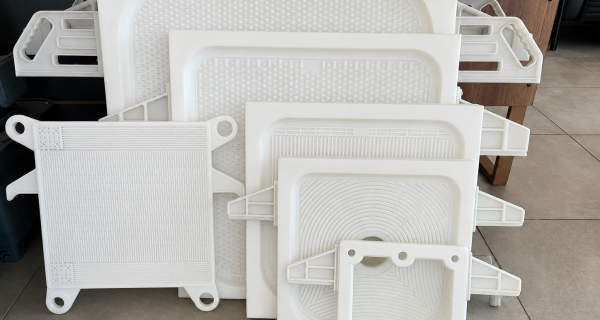
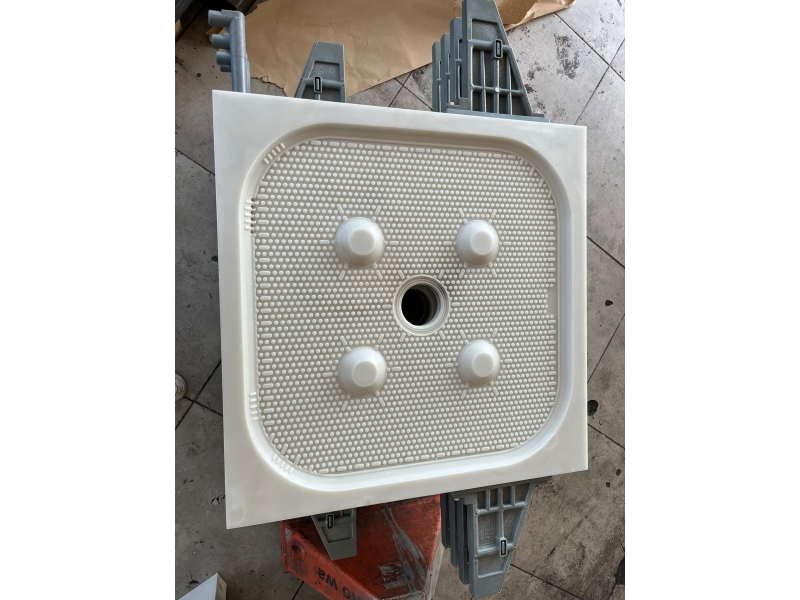
Choosing the right filter press plate means matching the plate to the process and to the press, not simply matching a nominal size. The key checks are slurry characteristics, operating temperature, plate construction, chamber geometry, feed and filtrate porting, filter cloth interface, mechanical loading and compatibility with the existing plate pack. For replacement plates, an identical outside dimension is only the starting point.
A useful way to approach filter press plate selection is to define the filtration duty first, then verify every interface between the plate and the machine.
Define the filtration duty before choosing a plate format
Start with the material being filtered and the result required from the cycle. Chemical composition, temperature, solids content, particle characteristics and abrasiveness all influence the conditions the plate must tolerate. Cake formation also matters: some duties need a straightforward fixed-volume chamber, while others may benefit from a secondary squeezing stage.
Polypropylene is widely used for industrial filter press plates, but material selection should still be based on the actual process medium and temperature. A material that performs well in one slurry should not automatically be assumed suitable for another. Abrasive solids also deserve attention because wear can be concentrated around feed passages, drainage areas and sealing surfaces.
For a replacement plate, identify the existing plate before comparing products
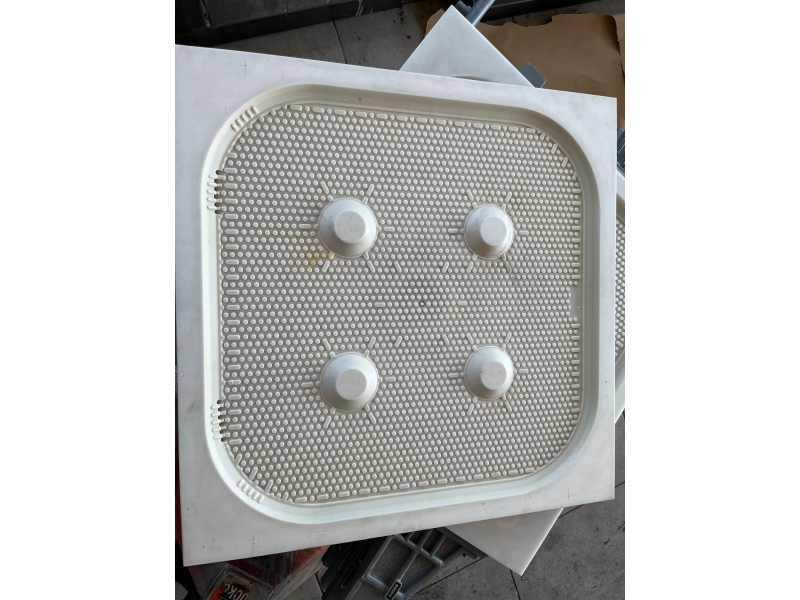
Replacement selection is primarily a compatibility exercise. Record the existing plate thickness, chamber depth, handle position, feed opening, filtrate outlets, sealing profile, drainage face and cloth attachment method. These details can differ between plates that share the same external dimensions.
If the original drawing is unavailable, clear front, rear and side photographs with dimensions are valuable. Port positions should be measured from fixed edges rather than estimated visually. Basic information from the filter press nameplate or technical documentation should also be collected before a substitute is selected.
Choose the plate design according to the filtration objective
Recessed chamber plates
Recessed chamber plates create fixed-volume chambers when the press closes. They are widely used for industrial dewatering and are a common choice where a conventional cake-forming cycle is required. In an existing recessed-chamber press, replacement plates should preserve the established chamber depth, plate thickness and flow configuration unless the plate pack is being deliberately redesigned.
Membrane plates
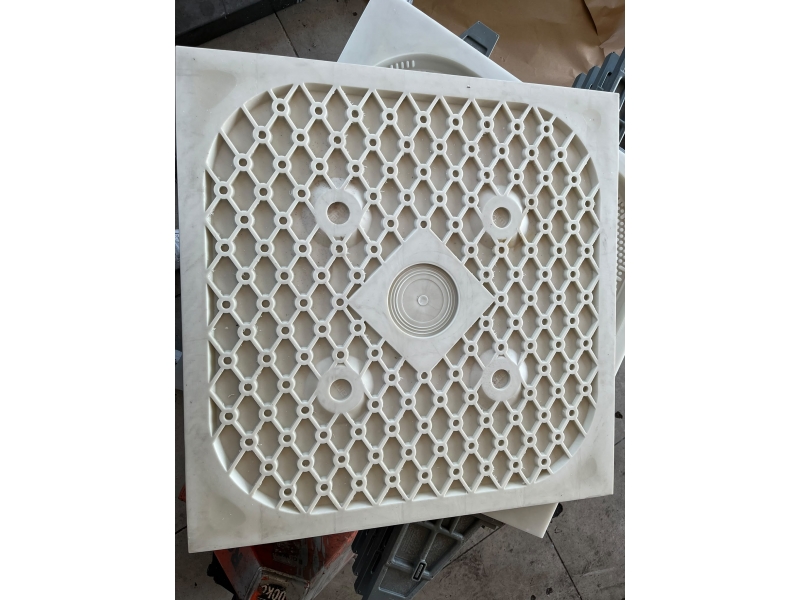
Membrane plates add a squeezing stage after the initial cake has formed. They may be considered where additional dewatering or a more controlled final cake condition is important. When membrane plates are proposed for an existing press, the decision extends beyond plate dimensions: the press frame, closure system and auxiliary squeeze equipment must be suitable for the intended configuration and loads.
Plate-and-frame plates
Plate-and-frame systems form the filtration space by alternating separate plates and frames. Replacement elements need to maintain the original sequence, frame thickness and flow passages. A recessed plate is therefore not a direct substitute merely because its length and width are similar.
Confirm the allowable load of the complete filter press
Plate strength must be compatible with the actual pressure and closing conditions of the machine. The feed pump's possible discharge pressure is not, by itself, a safe selection limit. The filter press frame, hydraulic closure and plate pack have their own allowable operating conditions.
For an existing press, use verified machine data as the governing limit. A replacement plate associated with a higher pressure capability does not increase the allowable pressure of the filter press. Any change in plate technology or operating condition should be checked against the machine documentation and the complete system design.
Match the flow path, not just the dimensions
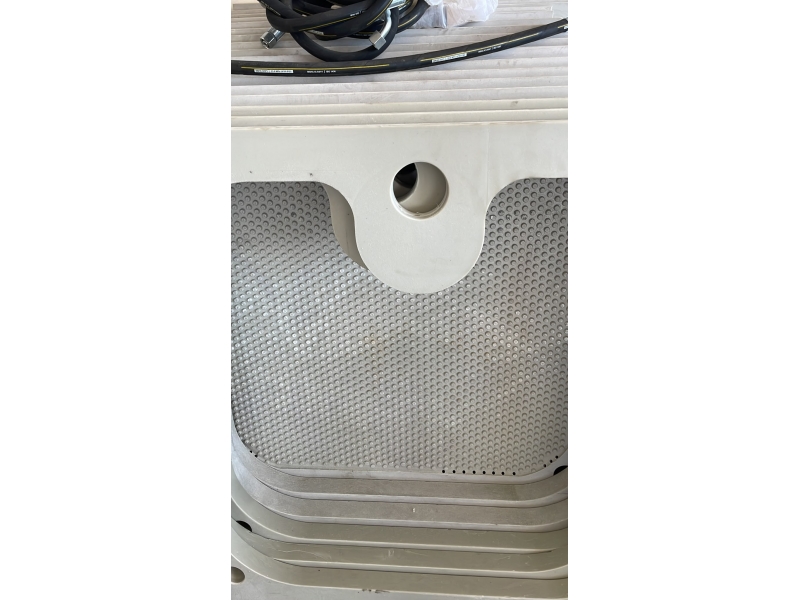
Feed and filtrate porting is part of the process design. Similar-size plates may use center feed, corner feed or other arrangements. They may also differ in open or closed filtrate discharge, drainage channel layout and ports used for washing or air blow.
Before ordering a replacement plate, compare:
- feed-hole location and geometry;
- number and position of filtrate outlets;
- open or closed filtrate discharge arrangement;
- drainage face and internal flow passages;
- any ports used for cake washing, air blow or related process steps.
A wrong port pattern can disrupt flow through the plate pack or create sealing and leakage problems even when the plate physically fits between the press rails.
Check chamber depth and total plate-pack length
Chamber depth influences the volume of solids retained between adjacent plates and the thickness of the resulting cake. It should therefore suit the solids loading and cake-discharge behavior of the process.
On an existing machine, plate thickness is equally important. Changing the thickness of several plates can alter the overall plate-pack length and the closing geometry. Partial replacement is generally easiest to manage when the new plates reproduce the geometry of the existing pack.
Make sure the filter cloth fits the selected plate
Filter cloth attachment is one of the interfaces most easily overlooked during plate selection. Feed-neck design, edge profile, gasket arrangement and the method used to secure the cloth must correspond to the plate.
If existing cloths are intended to remain in use, confirm this compatibility before the plate is ordered. A plate can be mechanically compatible with the press and still require a different cloth construction.
Replacement plate information worth preparing
A supplier or engineering team can evaluate a replacement more reliably when the following information is available:
- filter press make, model or available technical documentation;
- existing plate outside dimensions and thickness;
- handle dimensions and positions;
- feed and filtrate port locations;
- chamber or cake depth;
- filter cloth attachment method;
- process medium and operating temperature;
- verified operating pressure of the press;
- clear photographs of the existing plate from multiple sides.
Final selection should be based on the complete interface
The right filter press plate is the one that matches the filtration duty and every relevant interface with the press: plate design, material compatibility, load conditions, porting, chamber geometry and cloth attachment. For replacement work, outside dimensions alone do not establish interchangeability.
For available configurations and technical details, review Akfen Engineering's filter press plate product page and compare the options with the requirements of your existing press and process.